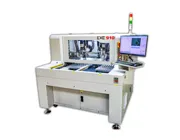
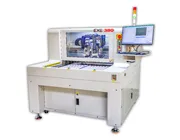
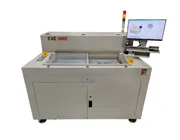
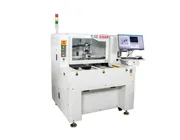
𐄀 Focus on providing PCBA separator manufacturing process solution

As global electronics rapidly evolve toward miniaturization, high density, and ultra-high reliability, the manufacturing processes of printed circuit board assemblies (PCB)—the core components of electronic products—face unprecedented challenges. Against this backdrop, fully automatic PCB depaneling machines have evolved from auxiliary equipment into indispensable key components of modern SMT production lines. With their distinct advantages of high precision, zero stress, and high efficiency, they are driving the entire electronics manufacturing industry toward higher levels of automation and intelligence.
Traditional methods like manual bending, V-cut depaneling machines, or simple guillotine-style cutting commonly suffer from high stress, low precision, excessive burrs, and poor consistency. Such stresses easily cause invisible damage to precision components and solder joints, increasing potential product failure rates. This has become a significant bottleneck hindering quality and capacity improvements, particularly in reliability-critical fields like 5G communications, autonomous driving, and high-end medical equipment.
Modern fully automatic PCB depaneling machines integrate cutting-edge technologies including precision machine vision, high-rigidity motion control, adaptive force sensing, and intelligent software algorithms, achieving revolutionary breakthroughs:
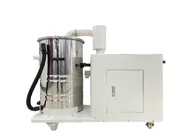
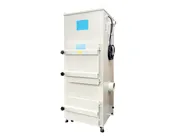
1. Stress Elimination, Safeguarding Core Quality: Employing either milling cutter or laser cutting principles. Milling cutter technology utilizes high-speed rotating carbide tools for precision milling, paired with dust extraction systems to achieve dust-free, clean cutting. Laser cutting employs high-energy laser beams for non-contact material vaporization, truly achieving zero physical stress and perfectly protecting sensitive components. Both methods effectively prevent micro-cracks and solder joint damage.
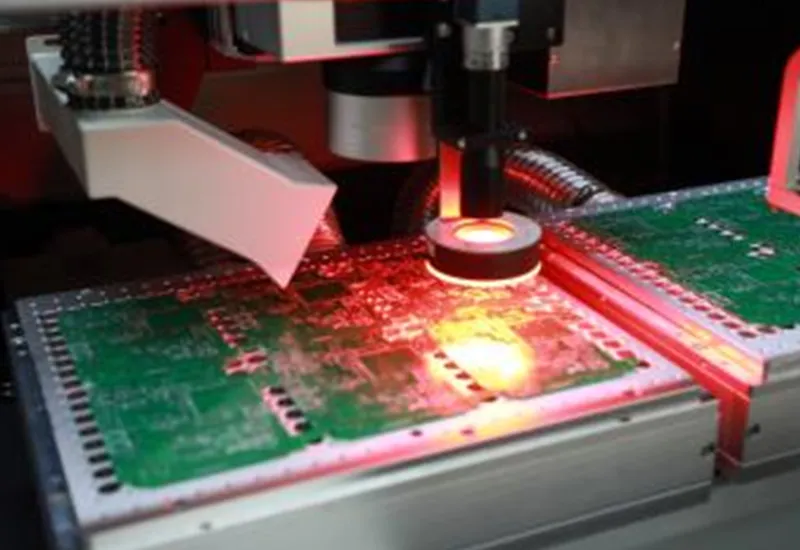
2. Vision-Empowered, Intelligent Adaptability: Equipped with a high-resolution CCD camera and advanced image processing system, it automatically identifies reference marks and locates cutting paths, effortlessly handling complex shapes (curves, irregular contours) for panel separation. Even with minor positional deviations inincoming materials, the equipment automatically corrects itself, ensuring cutting precision typically reaching ±0.02mm.
3. Full Automation for Dramatic Efficiency Gains: From loading, positioning, and cutting to cleaning and unloading, the entire process requires no manual intervention. Seamless integration with SMT lines or AGV carts enables 24/7 continuous operation. Board separation is completed in seconds, boosting production efficiency severalfold while significantly reducing labor costs and operational risks.
4. Data Traceability and Intelligent Management: Equipped with an MES system interface, it records real-time production data, equipment status, and cutting quality information. This enables full lifecycle quality traceability for products, providing robust support for smart manufacturing and data analytics.
Currently, fully automatic panel splitters are widely used in:
Communications: 5G base station modules, optical modules, smartphone motherboards.
Automotive electronics: ADAS controllers, infotainment systems, power control units (PCUs).
Consumer electronics: Wearable devices, high-end laptops, camera modules.
Industrial and medical: Industrial control motherboards, servo drives, medical monitoring equipment.
According to forecasts by renowned market research institutions, driven by these high-growth sectors, the global market for fully automatic depaneling equipment is projected to expand at a compound annual growth rate exceeding 15% over the next five years.
Leading domestic electronics manufacturers are intensifying R&D investments to deliver more competitive solutions. Examples include applying artificial intelligence (AI) for defect prediction and cutting path optimization, integrating digital twin technology for virtual debugging and predictive maintenance, and developing moreenergy-efficient and eco-friendly UV/IR laser sources. These innovations not only enhance equipment performance but also propel the de-panelization process from "automation" to "intelligence."
"Fully automated PCB depaneling machines are no longer mere 'cutting' tools, but critical nodes ensuring core reliability of electronic products and elevating smart manufacturing levels. They address key pain points in high-end manufacturing and serve as essential tools for electronics manufacturers advancing toward Industry 4.0. In the future, suppliers offering integrated, flexible, and intelligent depaneling solutions will dominate the market."
As chip integration intensifies and board designs grow increasingly complex, demands for precision, flexibility, and intelligence in de-panelization will only escalate. The fully automatic PCBA de-panelizer industry will continue focusing on reduced stress, heightened efficiency, smarter adaptability, and broader material compatibility—becoming the foundational force enabling the manufacturing of next-generation electronic innovations.
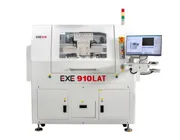
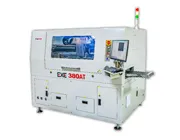
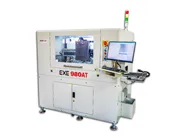
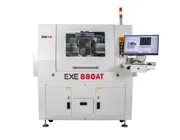
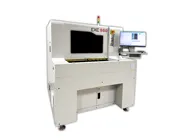
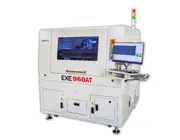
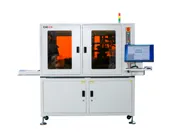
Fully automatic PCB depaneling machines are automated devices designed to separate panelized PCBs into individual units (single boards). Utilizing precision mechanical or laser technology, they perform cuts along predefined paths to ensure components and circuits remain undamaged during separation. These machines represent critical back-end equipment in modern electronic assembly (SMT) production lines.